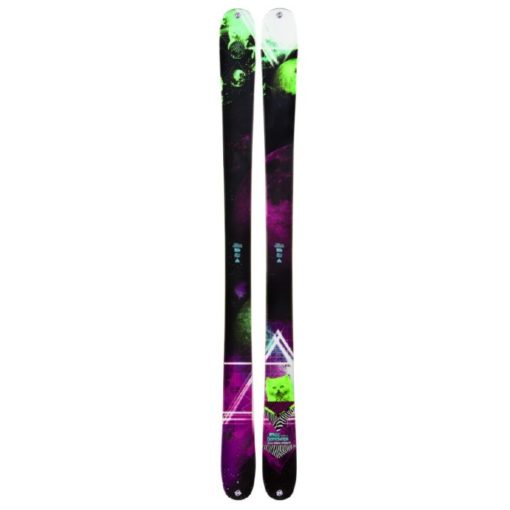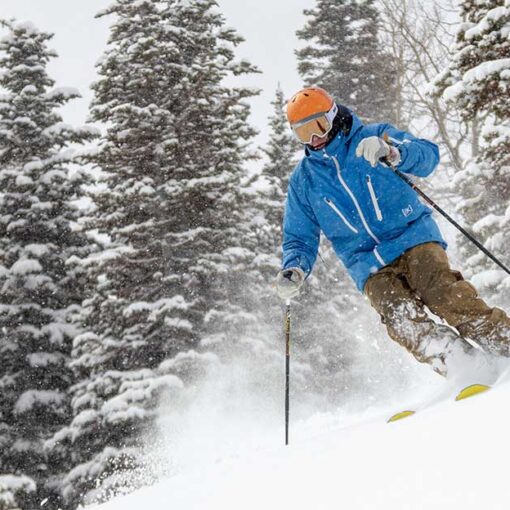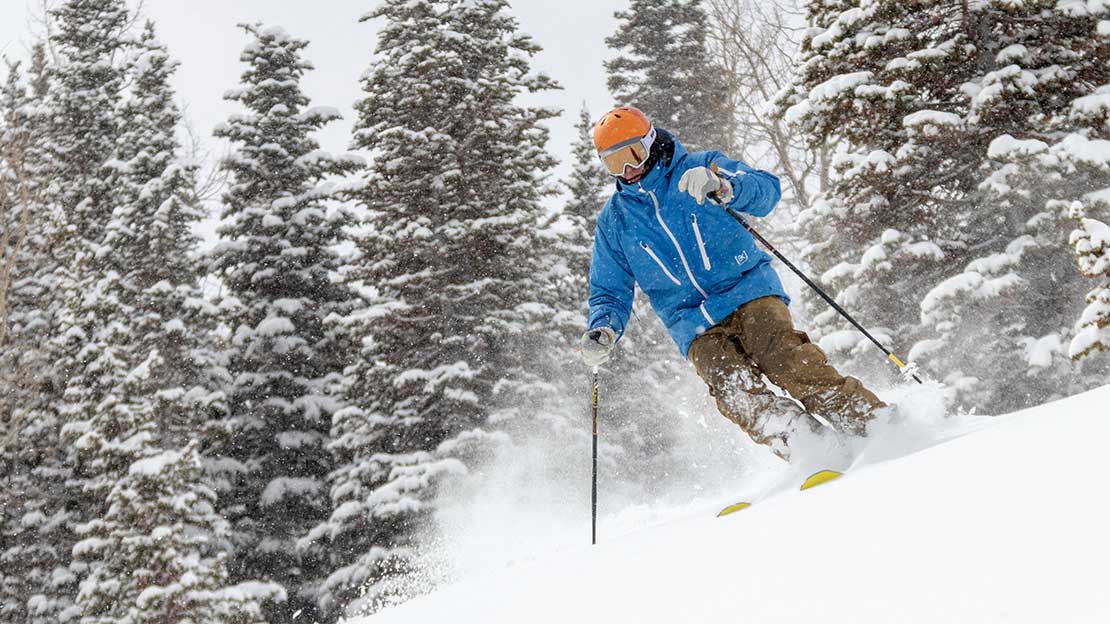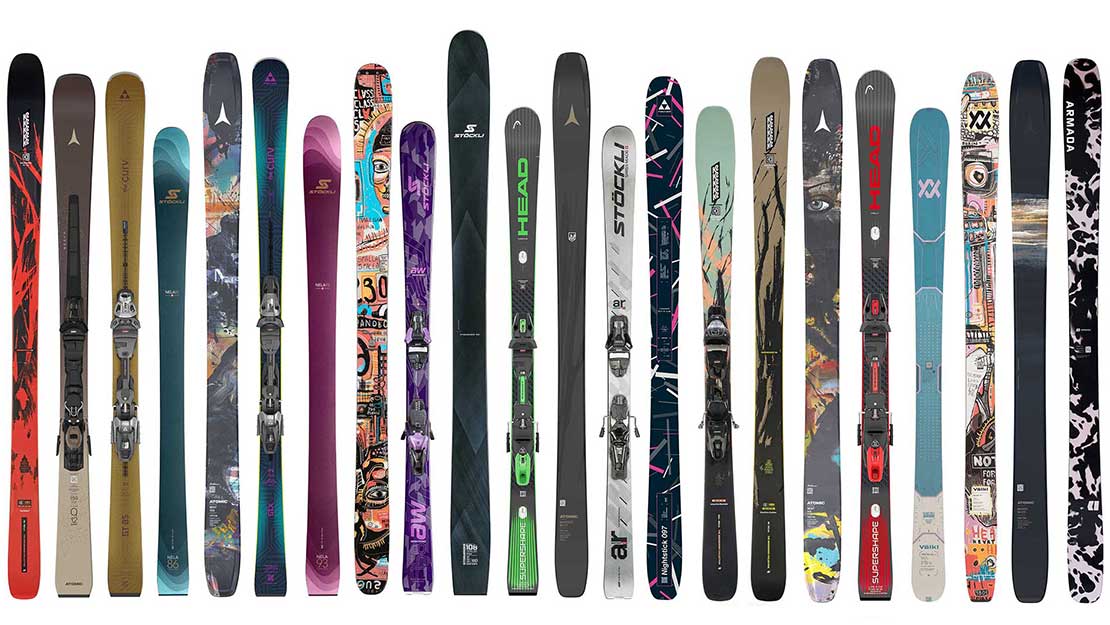
A ski wall isn’t just a collection of skis at a ski shop. The types of skis a shop has on their wall tells a larger story. It can tell you something about the snow trends in that area. Are there more carving skis for icy conditions, or wider powder skis because they get lots of snow? You can also learn something about the shop itself.
The skis on the Jans Ski Wall aren’t just chosen at random or by what’s trending online. Our ski buying team has decades of experience that go into our testing and selection process. We don’t carry every ski, or every brand. There are plenty of good skis that aren’t on our wall. The skis we picked come from brands that we ski ourselves, and the selection offers something for every type of skier.
Ski Categories
We divide our ski wall into different categories based on ski width underfoot. Carving skis are the narrowest, less than 80 mm. All-Mountain skis are between 80-90 mm. The next size up, All-Mountain Wide, are 90-100 mm. Finally, Powder skis are wider than 100 mm.
- Carving skis: 70-80 mm
- All-Mountain skis: 80-90 mm
- All-Mountain Wide skis: 90-100 mm
- Powder skis: 100 + mm
Categorizing by width makes sense because skis in a similar width usually share the same purpose and have similar attributes. While this provides a good general framework, there’s more to a ski than just width underfoot.
This year we’re taking a deeper dive into some of the differences between skis within these categories. We’ll pick two ski models in each category to discuss for comparison.
Carving skis: 70-80 mm
These narrow, performance-oriented skis have a waist width ranging from under 70 mm to 80 mm. Camber in the profile works with the sidecut shape to maximize edge contact while carving turns. This allows skiers to carry significant speed through their turns with confidence that the edges will hold firm in the snow.
The main differences among carving skis are the width underfoot, shape, and materials used in construction. The Stockli Laser SC has a 70 mm width underfoot with a racing-inspired construction featuring a woodcore and metal layers. Comparatively, the DPS Pisteworks 79 has wider 79 mm bases and a unique construction made completely from carbon fiber.


Narrower skis have more sidecut and more edge making contact with the snow when carving. While these skis are capable of more aggressive carving, they can also feel unstable when skiing on the bases. The Laser SC performs best when engaging the ski in carved turns and is less comfortable for casual skiing on the bases and sliding out turns. The extra width underfoot and the rounded shape of the tails make the Pisteworks 79 more comfortable for casual skiing while still being capable of high-end performance.
Traditional carving skis evolved from racing skis with a similar construction made with a woodcore and thin layers of a metal alloy. These materials absorb vibrations and remain stable at high speed, but they also make skis stiffer and heavier, requiring more energy to flex and carve the ski. Some skis have lighter materials that reduce weight, making the skis less demanding. DPS Pisteworks skis are an extreme example of lightweight carving skis with their full carbon fiber construction.
All-Mountain skis: 80-90 mm
For the majority of skiers, an all-mountain ski is the ideal choice on most days. They have wider bases than carving skis, between 80 mm and 90 mm, which makes them more stable and comfortable to ski flat on the bases. A user-friendly shape allows easy handling. Some all-mountain skis aim to be good at everything, while others are more purpose oriented—like all-mountain models that specialize in carving.
One of the skis that’s good at everything is the Volkl Mantra 84. The shape and profile are designed to be versatile while still prioritizing on-piste performance. The carving performance is good, but not as strong as a carving ski. A slightly softer construction makes the Mantra more comfortable for skiing bumps and mixed terrain.


The Atomic Cloud Q12 Revoshock C is a carving-focused all-mountain ski. You could also call it a wide carving ski. The profile resembles other carving skis with camber through the entire ski length and zero tip and tail rocker. It also has the robust wood and metal construction used in carving skis, though the Cloud skis have Atomic’s Light Woodcore to make the skis lighter and easier to handle. With 84 mm underfoot, these skis are wide enough to venture off groomed runs—but they lack the other design features that make all-mountain skis capable in mixed terrain.
Shop Volkl Mantra 84 – Women’s
Shop Atomic Cloud Q12 Revoshock C – Women’s
All-Mountain Wide skis: 90-100 mm
These skis have similar shape and profile as the all-mountain skis but with wider bases between 90 mm and 100 mm. This extra width makes them more stable in variable snow conditions with added float in fresh powder. As we progress toward the wider models on the wall, typically skis have more rocker in the profile since they will be spending more time off piste and in powder. With more rocker that means less camber in the profile—but they still have enough camber for solid edge hold on hardpack, and many of these wider skis can still carve very well.
Skis in the 90-100 mm range are well-suited for freeriding and freestyle. Typically all-Mountain Wide skis lean toward one of these two disciplines. The K2 Mindbender 96 is an example of a freeride ski, while the Armada ARV 94 is designed for freestyle. On the surface they might look pretty similar, and they’re both really good for all-mountain skiing, but they have subtle differences that change performance.


The Mindbender 96 has a robust construction with a metal layer in the form of K2’s Titanal I Beam that runs through the middle of the ski. The metal adds stiffness and absorbs vibrations, which helps for charging down steep lines and in variable snow. A directional shape with a mounting position slightly back gives the Mindbender more control navigating steep terrain and high speed.
Construction on the ARV 94 is optimized for the terrain park and reinforced for durability. The poplar woodcore has a lively pop and predictable responsiveness without excess weight. Hardwood inserts reinforce the binding area, and the oversized edges can withstand sliding rails and features. The twin-tipped shape with a center mounting point helps with spin tricks and skiing switch.
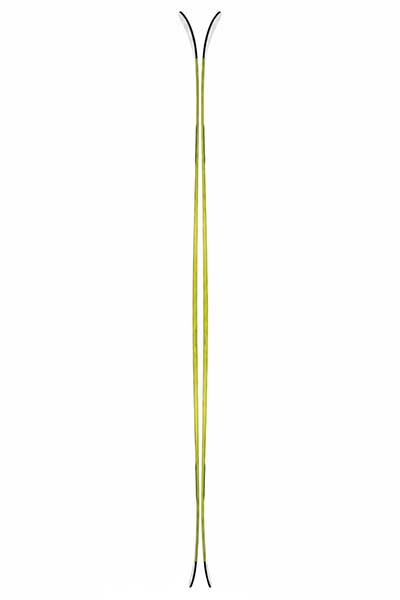
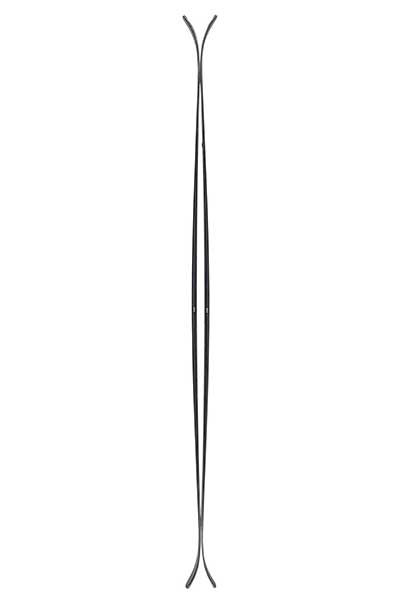
Both the Mindbender 96 and the ARV 94 have tip and tail rocker with camber underfoot, but the subtle differences change how they perform. The rocker on the Mindbender’s tips and tails is low rise and it extends further into the profile. This enhances turn initiation and float without producing chatter or losing too much edge contact with the snow. The tip and tail rocker on the ARV 94 are nearly mirrored, making this a twin-tipped ski that performs almost the same whether you’re skiing regular or switch. The tip and tail rise is more abrupt, which gives the ARV its playful character for slashing powder turns.
Powder skis: 100 + mm
On big powder days, having extra wide skis keeps you floating on top of the snow. The wider bases, over 100 mm, have more surface area that keeps these skis up on the snow where narrower skis would sink. Rocker in the tips pushes the skis upward onto the surface, and tail rocker produces a surfy feel in soft snow.
The Stormrider 108 is a new model from Stockli developed with freeride athlete Maxime Chabloz. It resembles Stockli’s other Stormrider skis with a big-mountain, freeride design and robust construction with dual Titanal layers. The Big Powder Rocker profile helps the Stormrider 108 float in deep snow despite having a heavier construction than other powder skis. The robust construction and camber underfoot means these skis rip on groomers if you end up missing out on the fresh powder.


Compared to the Stormrider 108, the Volkl Revolt 104 has a shape and construction that’s more typical for a powder ski. The Revolt is made without a metal layer, so it has a lighter weight than the Stormrider. A Multilayer Woodcore has soft wood and hardwood arranged within the ski to optimize performance. The rounded tails are more common on powder skis compared to the flat tails on the Stormrider. These tails give the Revolt 104 a surfy, playful feel in powder, and they’re better for riding switch.
Picking Your Skis
When you’re shopping for new skis it’s important to think about how you like to ski and the terrain you’ll be skiing. Information about the intended skill level and skiing style isn’t always obvious when shopping new skis—that’s where expert guidance comes in. The team at Jans has real experience skiing the models on our Ski Wall because we think that’s really important for being able to make recommendations.
Have the experts at Jans help you find your next pair of skis at our Park City location, or shop our entire ski selection online. Many of the models on our Ski Wall are available to demo through our ski test program, so you can try before you buy! And if you’re shopping online, we have our entire Ski Wall listed by category with specs and recommended skill level for each ski.
By Chris Norwood, Ecommerce Manager, jans.com